SMail: mail only verified people can send
Every sender is a KYC-verified person, every message is sealed on the sender's device, and there is no password to steal. Here is how SMail works.
Most fraud starts with a message from someone pretending to be someone else. SMail removes the pretending: only verified people can send.
Who can write to you
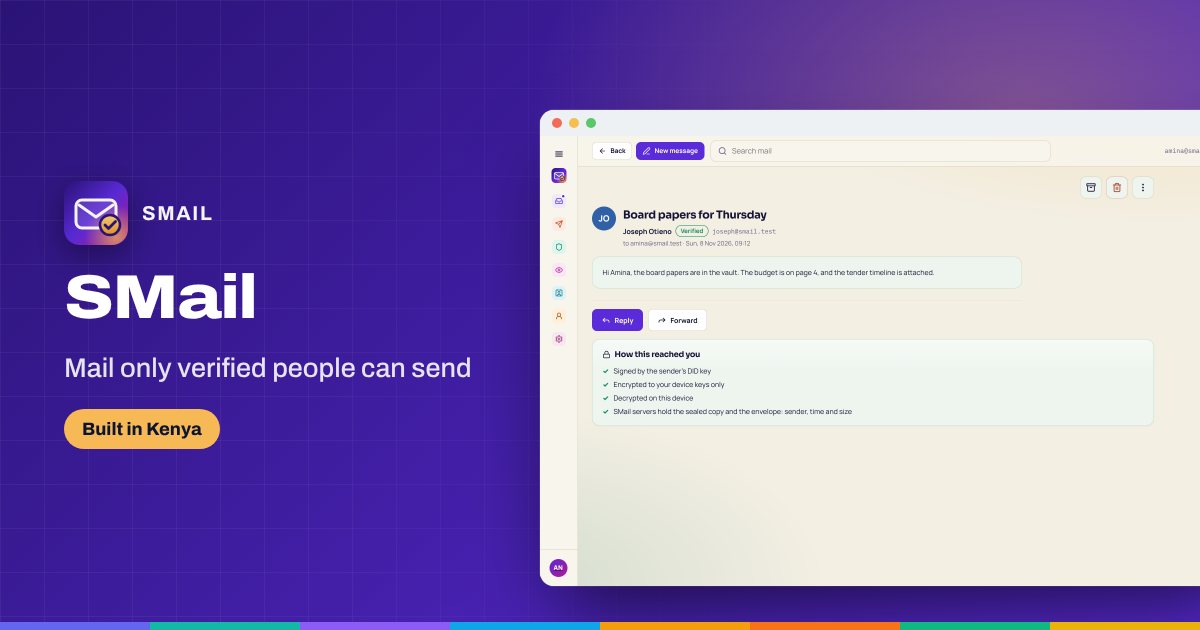
An SMail account needs a KYC-verified wallet, one account per person. The name next to "Verified" is the name on the person's identity document, checked in person by an accredited identity partner.
Strangers do not land in your inbox. They wait in New verified contacts until you accept them, and your trust policy can block, allow or ask for a badge before anything reaches you.
Sealed before it leaves
Every message, attachment and draft is encrypted on the sender's device to each recipient's devices and their mailbox key, then signed by the sender's device. SMail's servers route ciphertext; they keep display names, addresses and public keys, never your words.
No password
You sign in by answering a request from SMail in your wallet. Passkeys and the phone's fingerprint work for 30 days after the wallet last signed in, then the wallet once again. With nothing to type, there is nothing for a look-alike page to steal.
Writing to people off SMail
A message to a Gmail or office address goes as a secure link that opens with four words. In the same tap as Send, your phone opens WhatsApp (or SMS) with the words written for them, while SMail emails the link. The words never reach TrustChain.
For organisations
Members join their organisation by showing a credential as a badge. Officers set policy, retention and legal holds two at a time, and they never read content. Escrow, where an organisation needs it, can only be opened by officers together, and every opening is recorded.