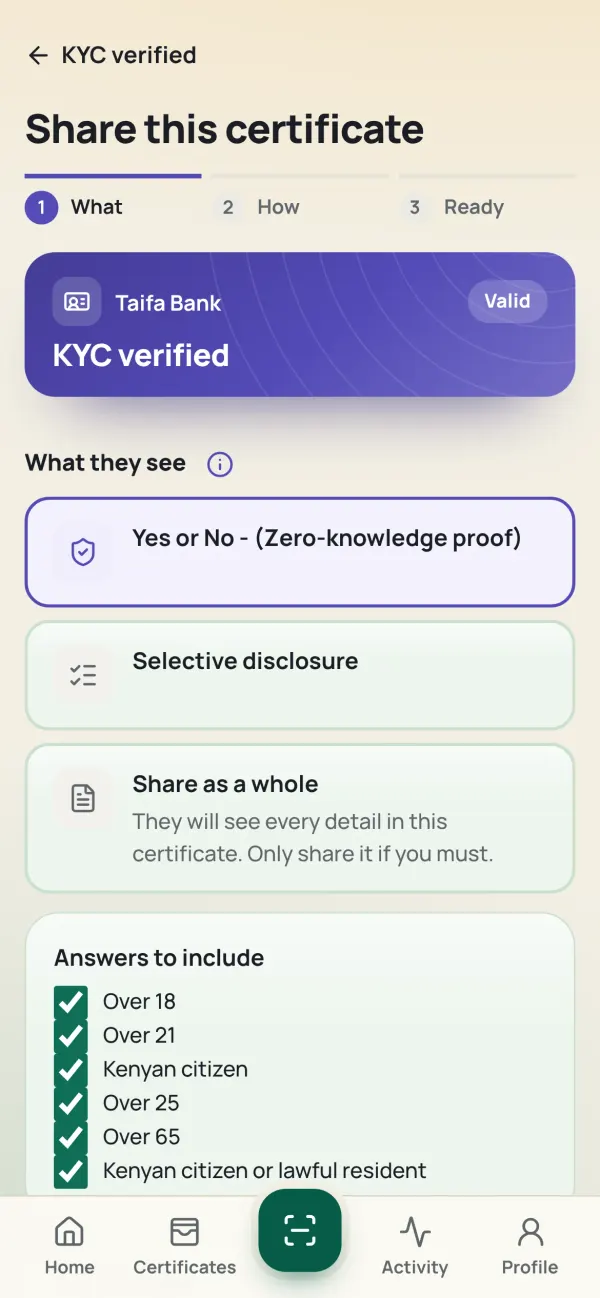
Three ways to share
Yes or No with a zero-knowledge proof, selected details, or the whole certificate. The same three words in every app.
Citizen WalletSSI TrustChain
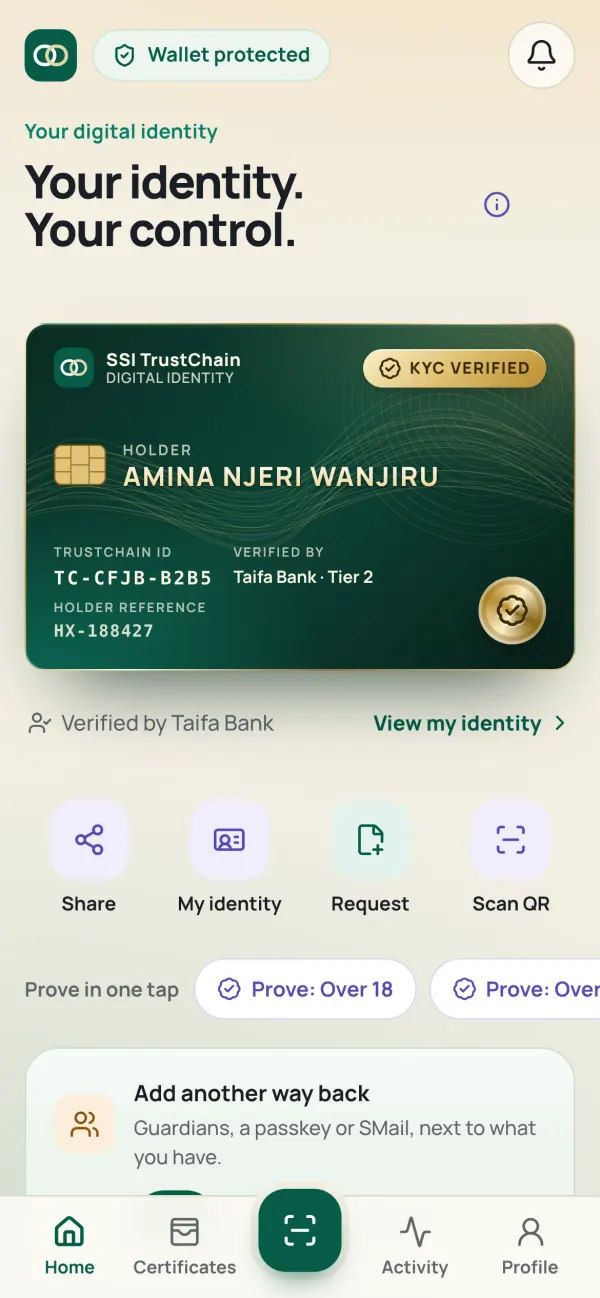
Get verified once by an accredited identity partner, then keep your KYC, degrees, licences and certificates on your own phone. Share exactly what is asked, prove things without revealing them, and recover the wallet if you lose your phone.
What it does
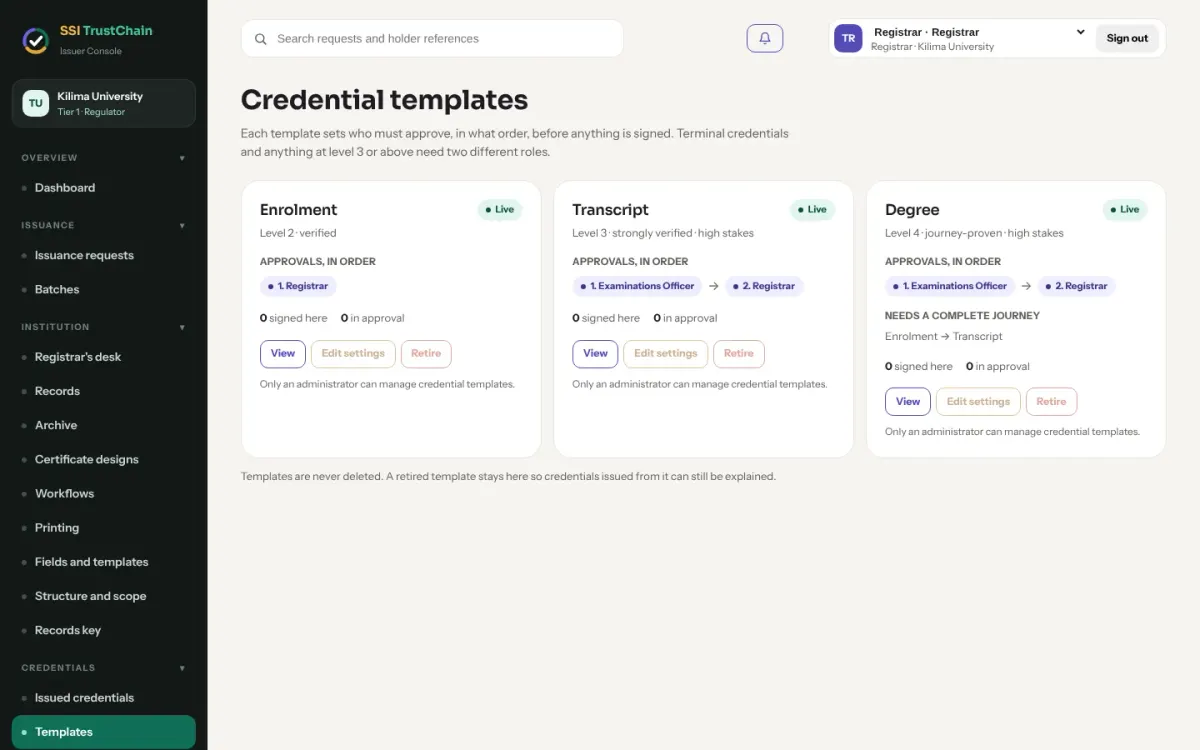
An accredited identity partner checks one of five documents (national ID, Maisha card, passport, alien or refugee ID) face to face. Your wallet then holds a "KYC verified" credential that expires with the document.
"Yes or No" proves a fact with a zero-knowledge proof, such as being over 18. "Selective disclosure" shares only the fields you tick. "Share as a whole" sends the full certificate. The same three words in every app.
Scan a QR code or open a link. The wallet shows who is asking, checks their registration certificate, and refuses any request that asks for more than they were approved to ask.
Each phone has its own key. Every presentation is signed over the verifier's one-time code, and each verifier knows you only by its own pseudonym, so your answers cannot be linked across organisations.
A recovery phrase on paper, a passkey, a security key, your SMail devices, or three of your guardians. Every recovery waits 48 hours, and you can stop it from your old phone.
There is no TrustChain password. The wallet opens with your PIN or fingerprint, wrong PINs make you wait and never wipe it, and it moves to a new phone with a code.
The same wallet in a browser and as an Android app, in English and Kiswahili, with a gold identity card once you are verified.
Every share is listed with what was shared and with whom. Ask a verifier to delete it, or go to the ODPC, from the same sheet.
See it
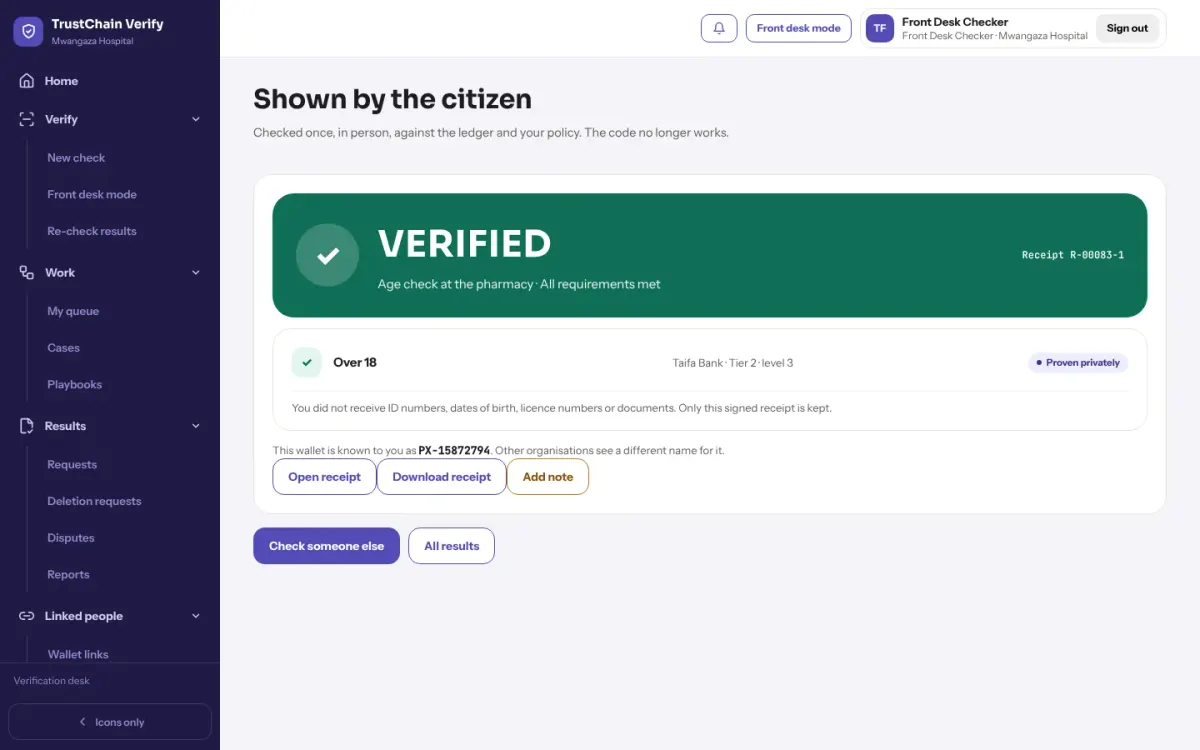
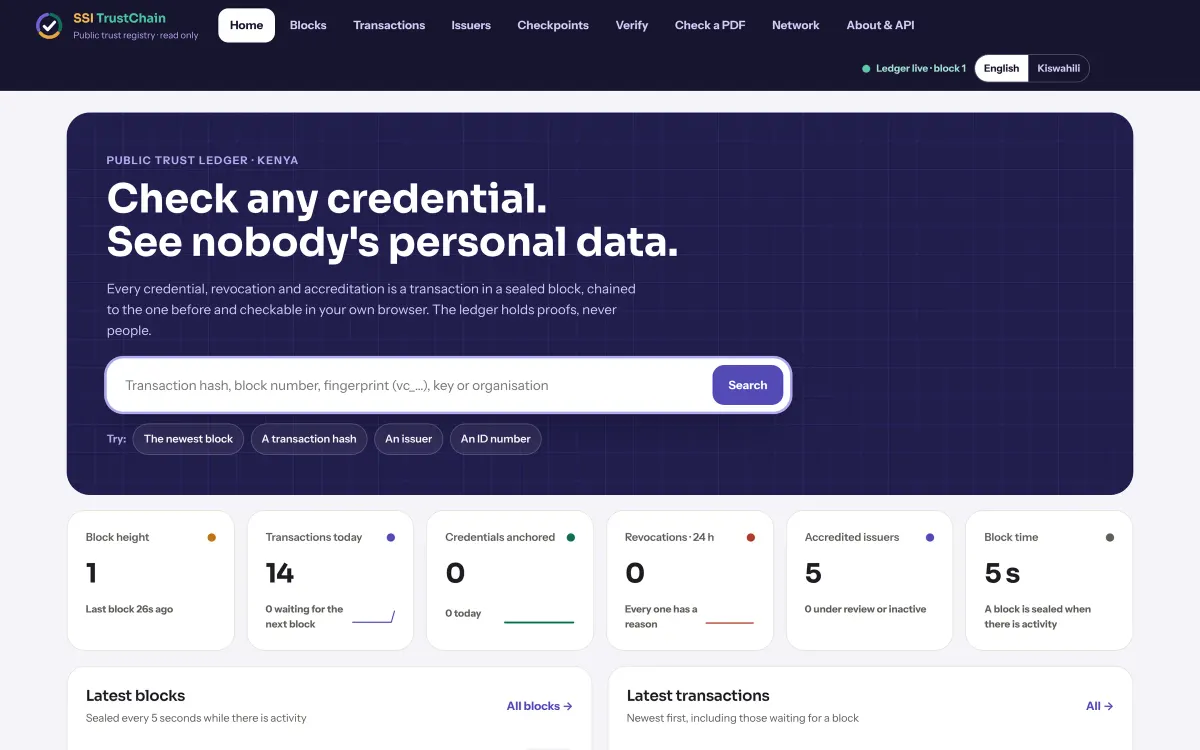
Real screens from the app, with invented sample names and figures.
Yes or No with a zero-knowledge proof, selected details, or the whole certificate. The same three words in every app.
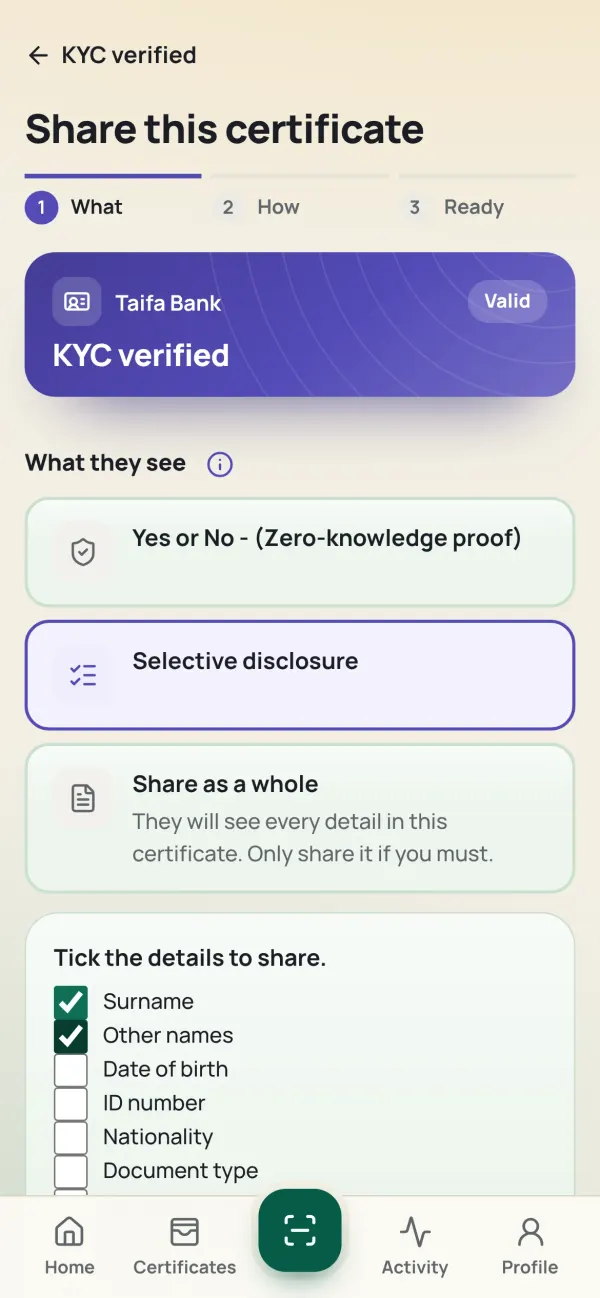
Choose exactly what leaves your phone. Everything else stays with you.
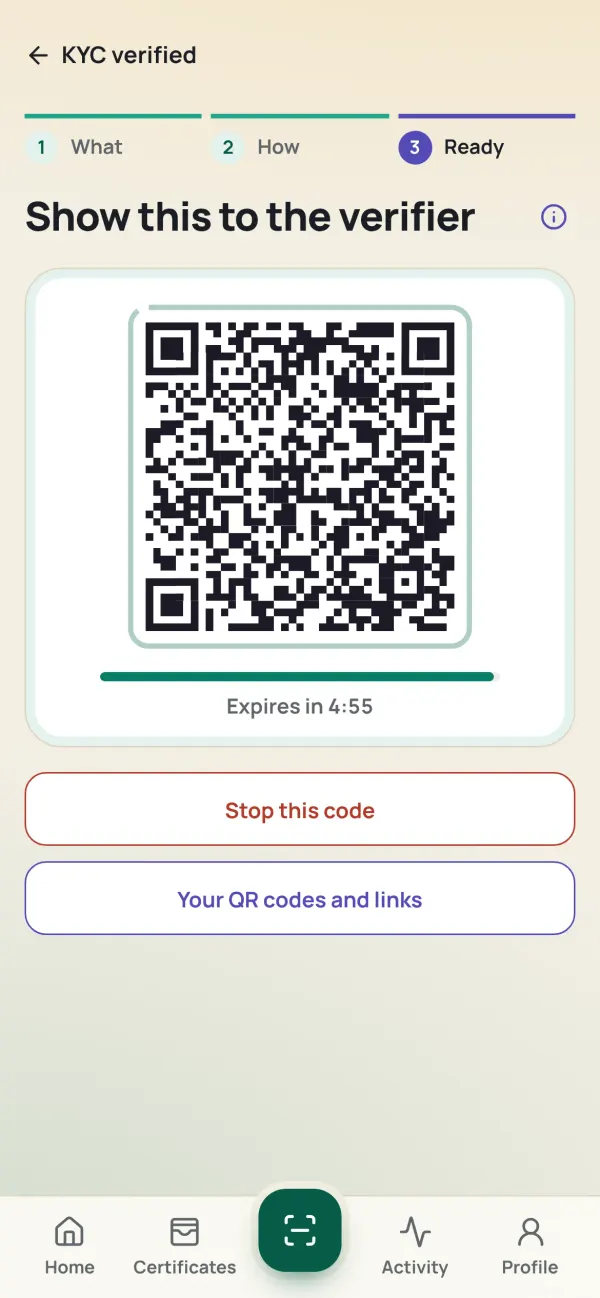
A one-time QR code, checked once by the verifier, gone in minutes.
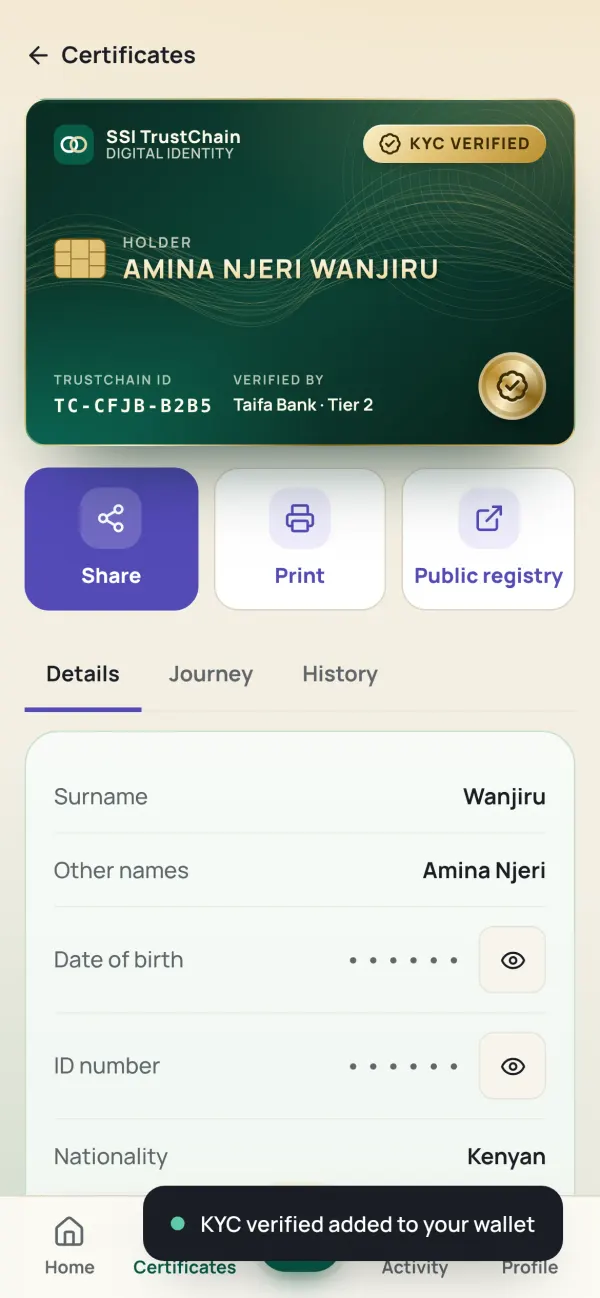
Each certificate with its issuer, its journey and its public registry entry. Sensitive details show only after your PIN.
How the trust works
Your identity partner, university, council or bank signs the credential with a key held in secure hardware.
It is stored encrypted on your phone and in a backup only you can open. TrustChain keeps no copy.
Each request shows who asks and what they will see. You share, or decline.
The verifier checks the signature, the issuer's accreditation and the status list, and keeps a signed receipt, not your documents.
Also in Citizen Wallet
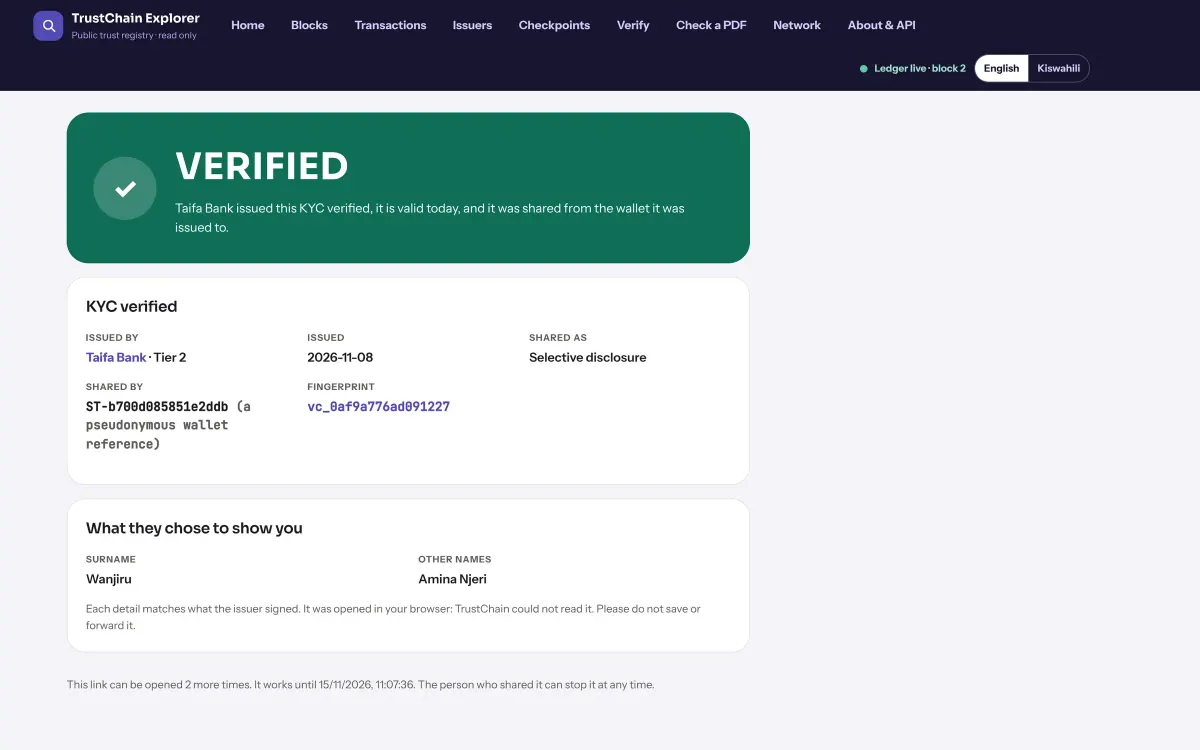
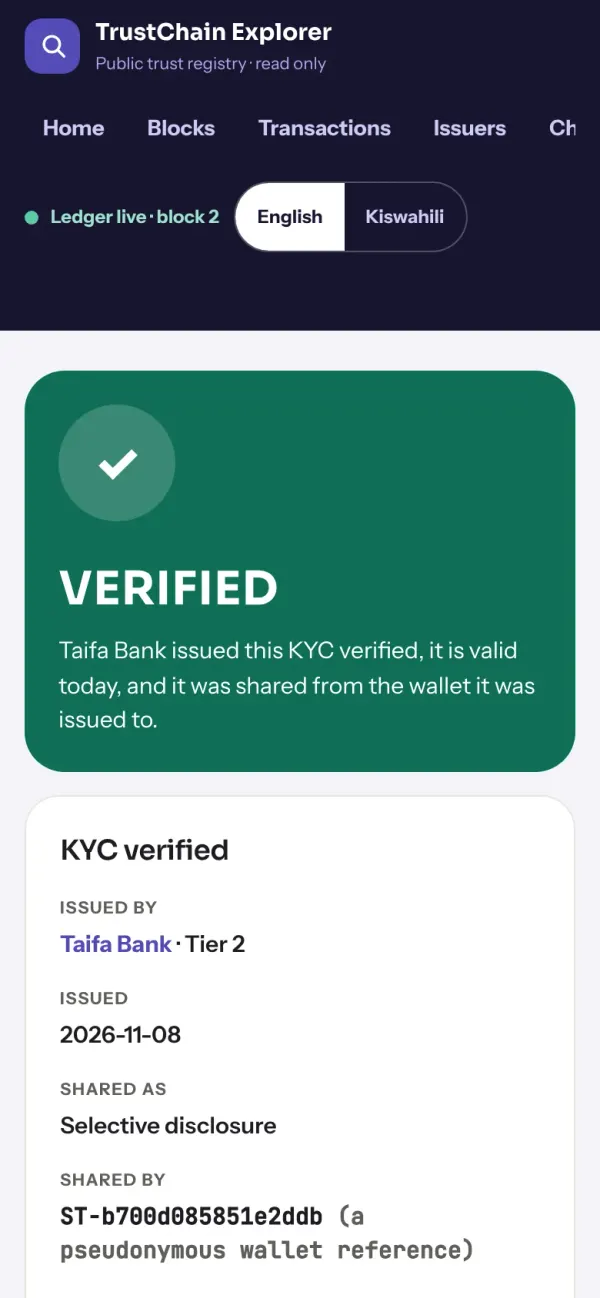
Share a link with someone who is not on TrustChain: it opens in their browser, which checks the issuer's signature against the ledger. TrustChain never sees the details, and the link stops when you say.
What you achieve
One identity
Sign in once with your verified wallet. What you seal in one app opens in the others, on every device you use.
Your identity partner knows you, because they checked your document in person. The network sees a pseudonymous holder reference and fingerprints, never your name or ID number.
Recover with your recovery phrase, a passkey, a security key, your SMail devices or three guardians. The recovery waits 48 hours and warns your old phone, so a thief cannot rush it.
No. Every verifier request carries a registration certificate saying what it may ask. The wallet checks it and refuses anything beyond it.
Yes. Citizens never pay to hold or share their credentials; organisations pay for issuing and checking.
We are onboarding the first institutions and organisations. Tell us what you issue or check today.